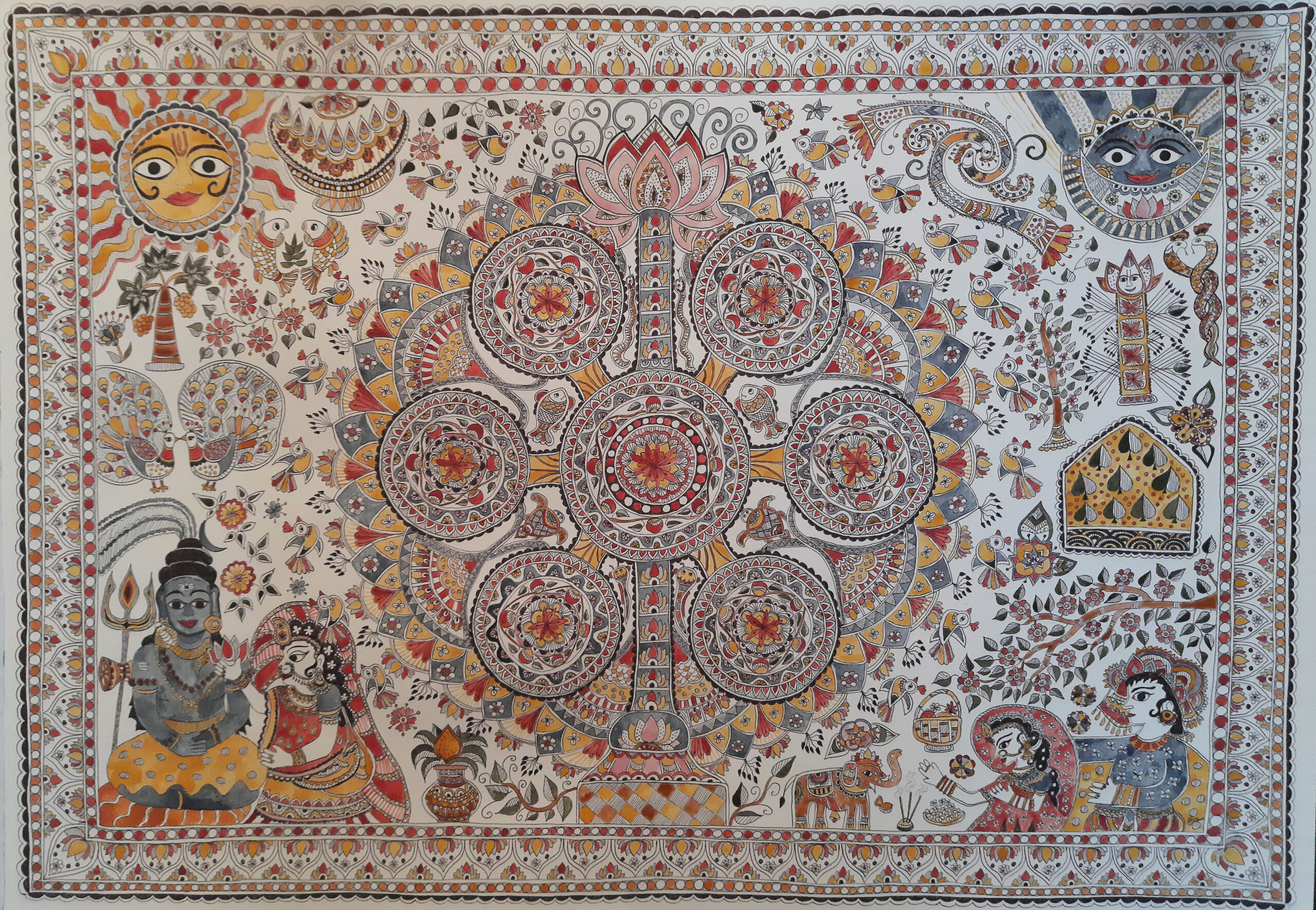
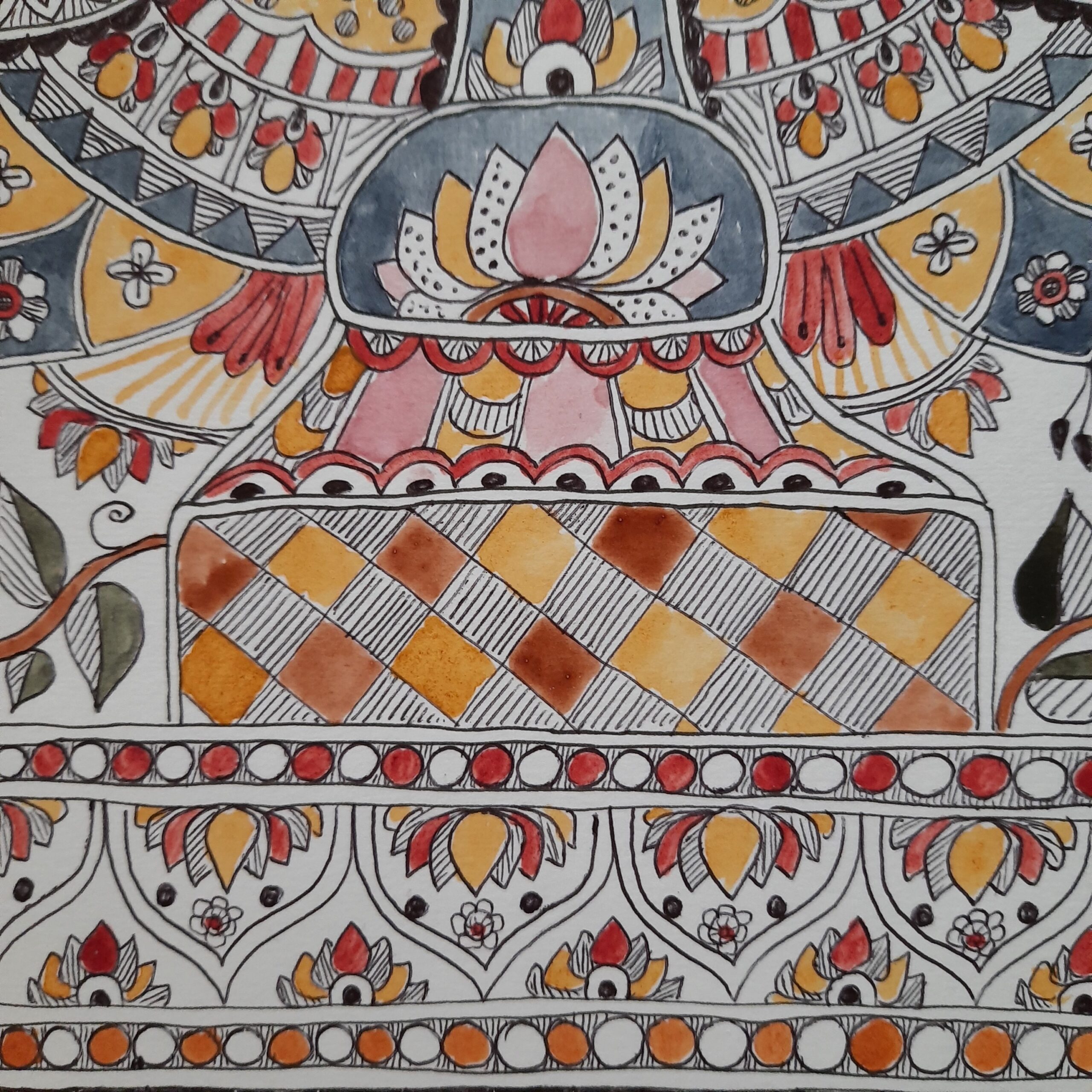
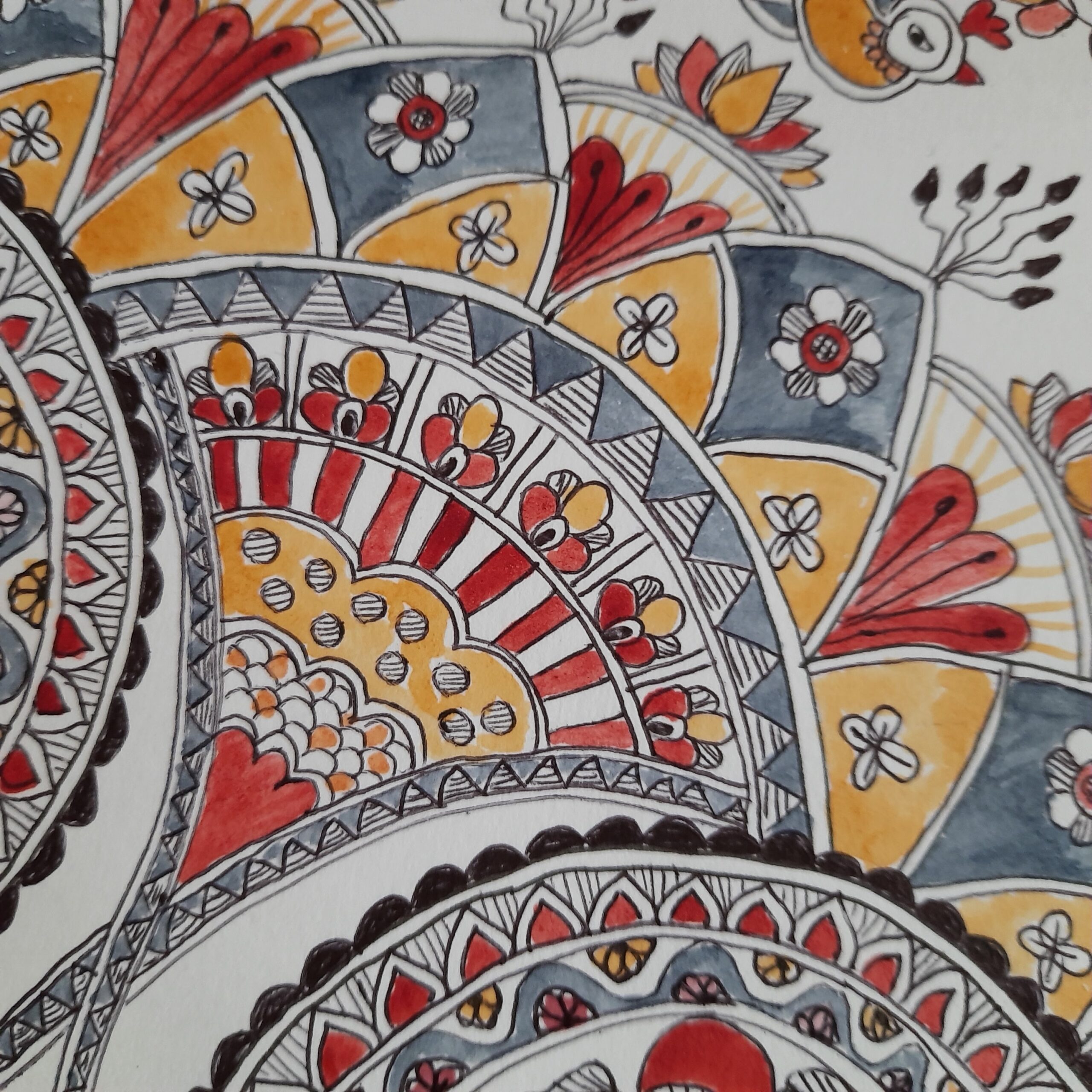
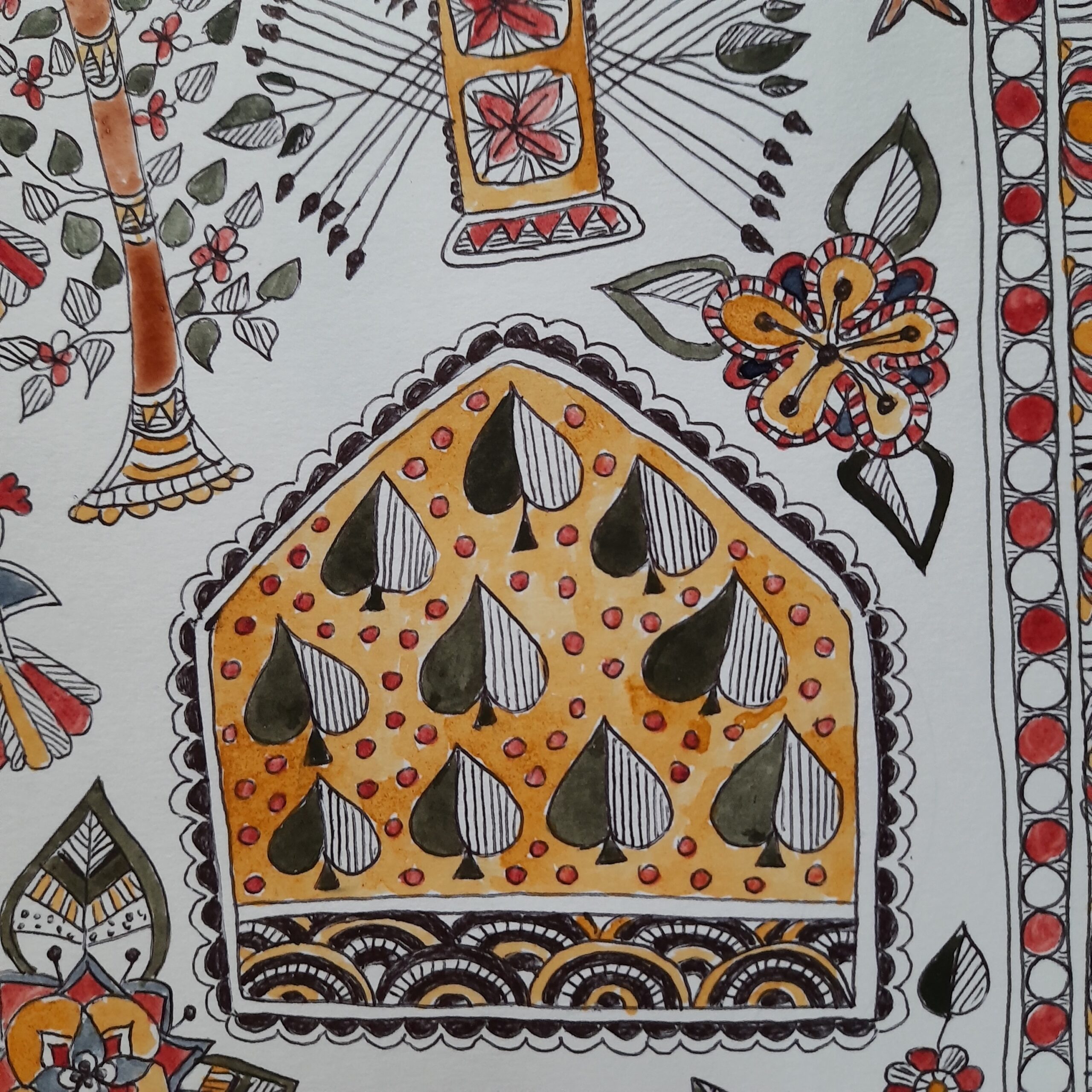
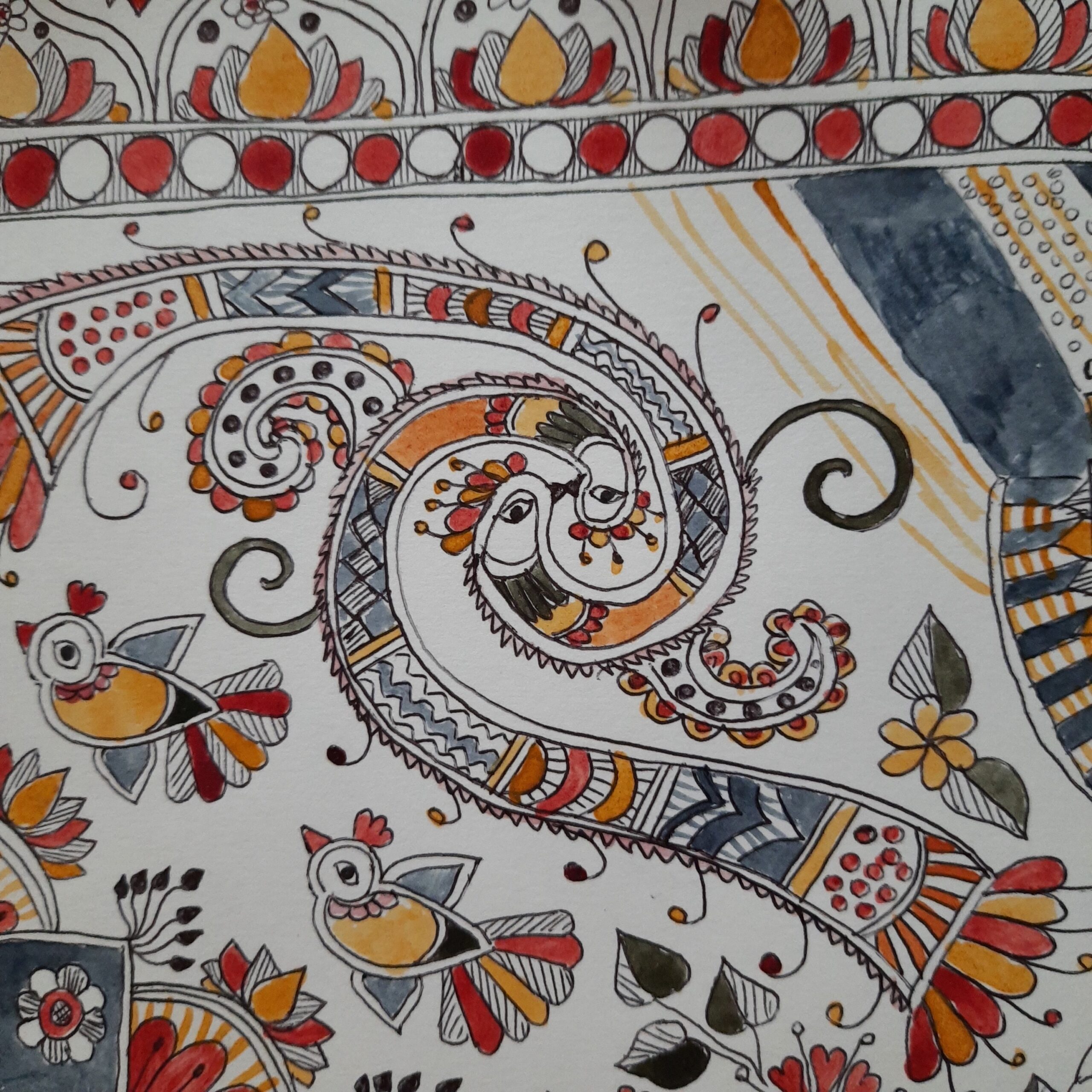
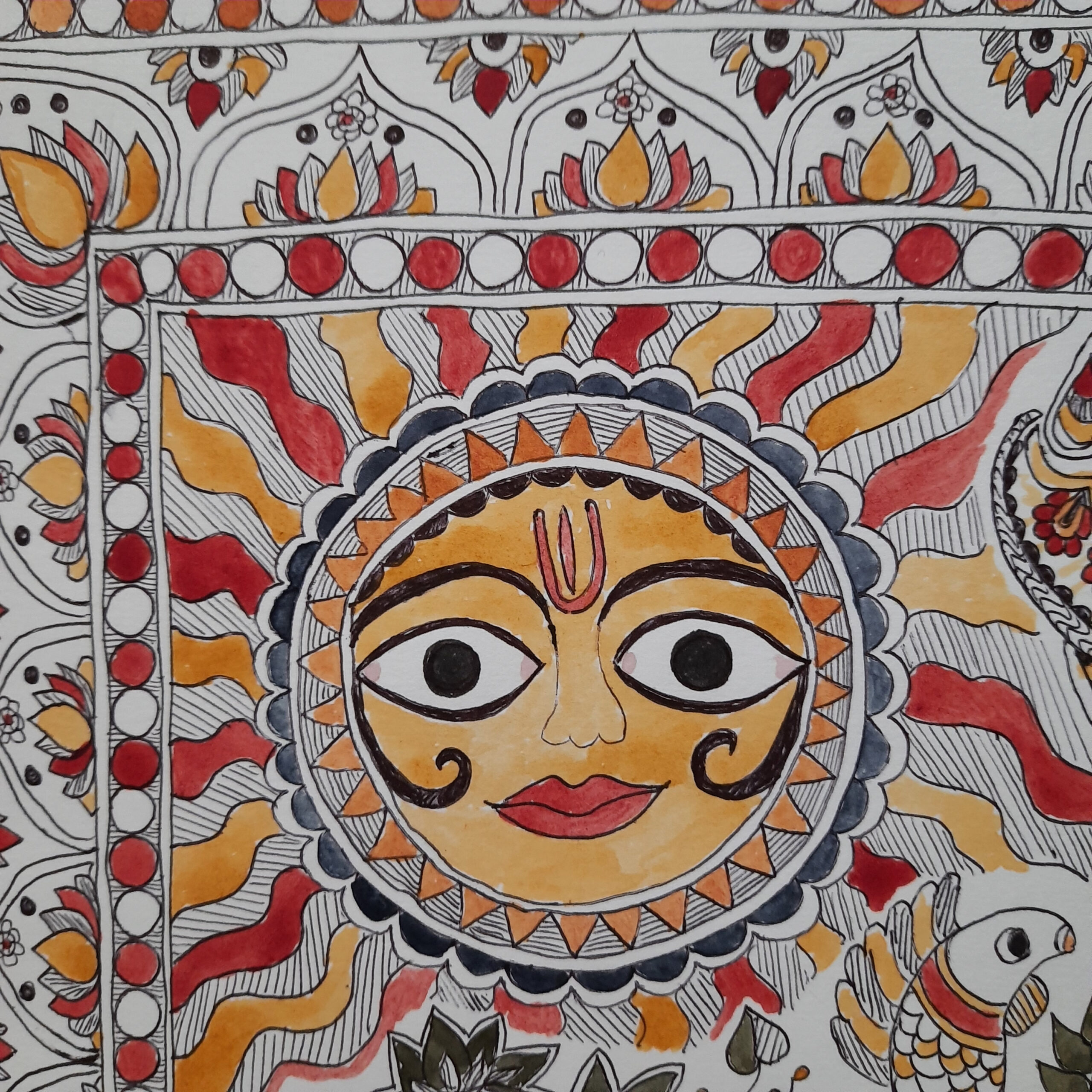
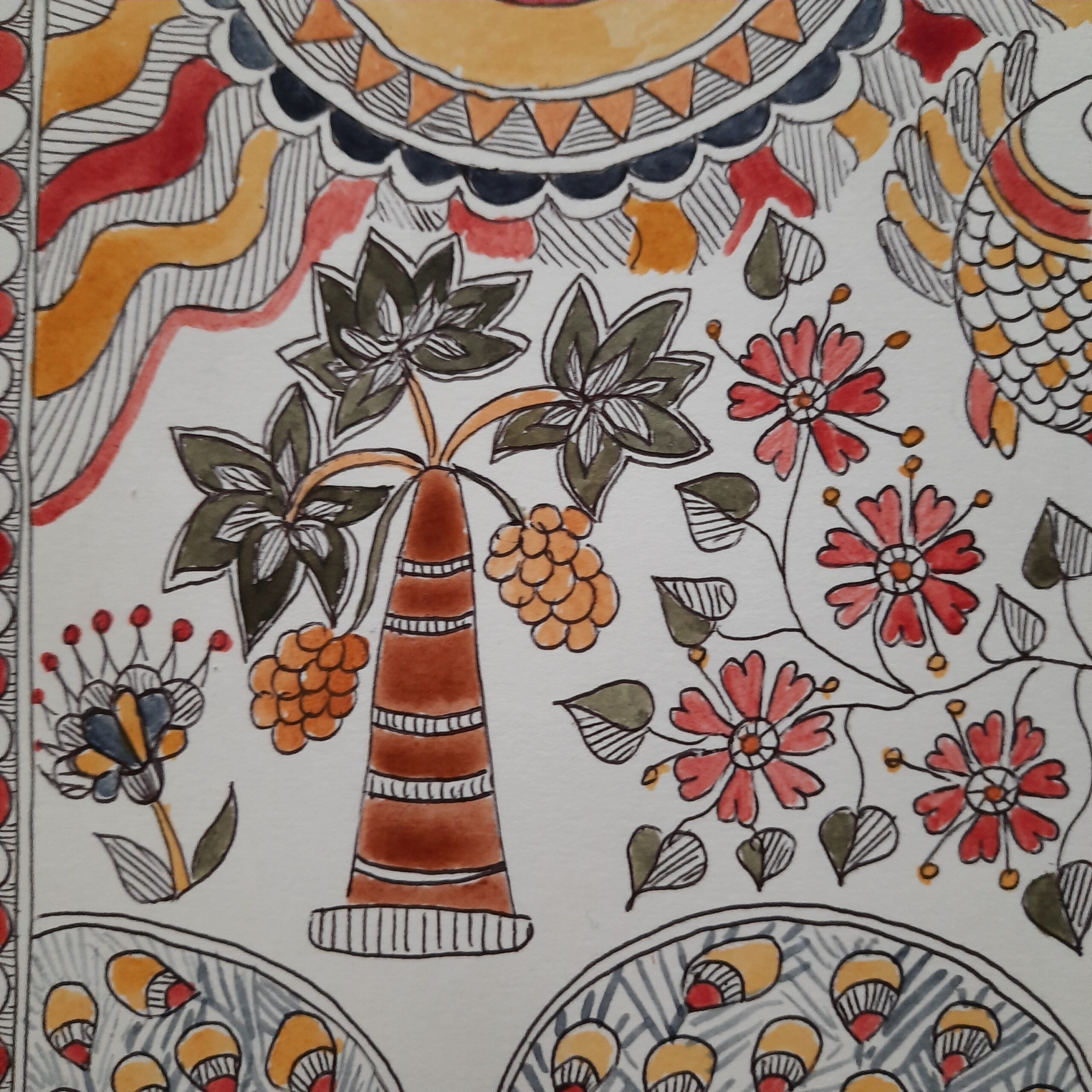
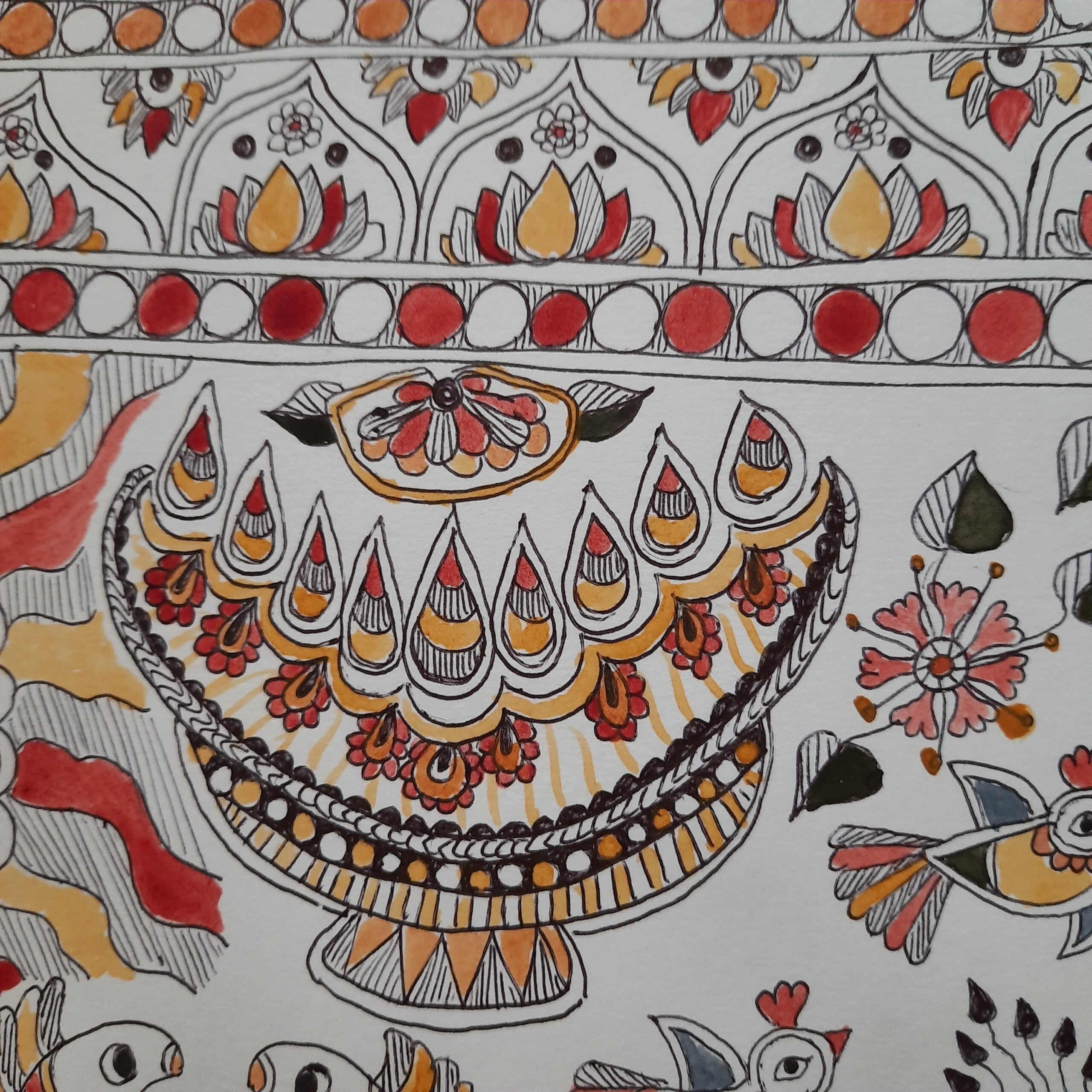
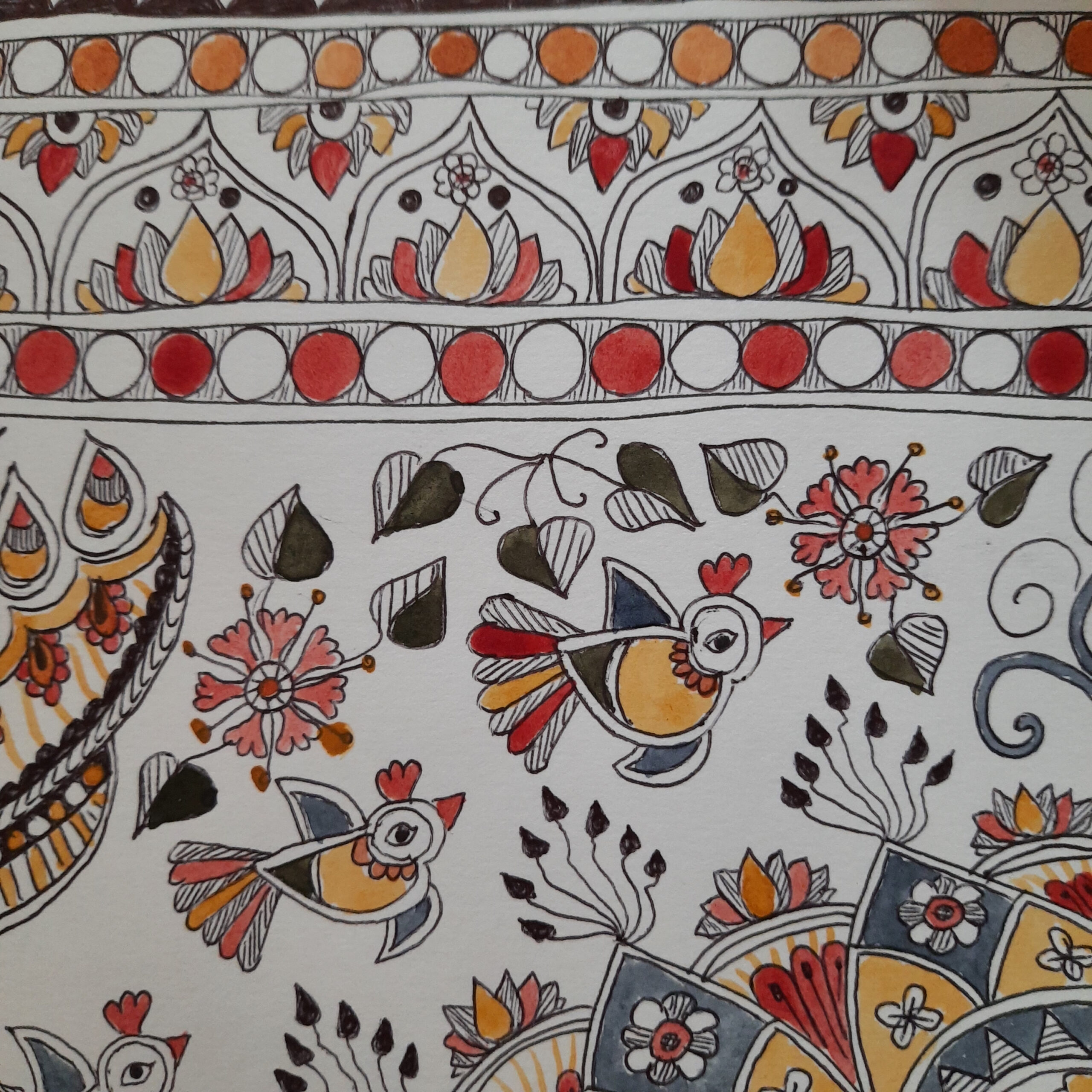
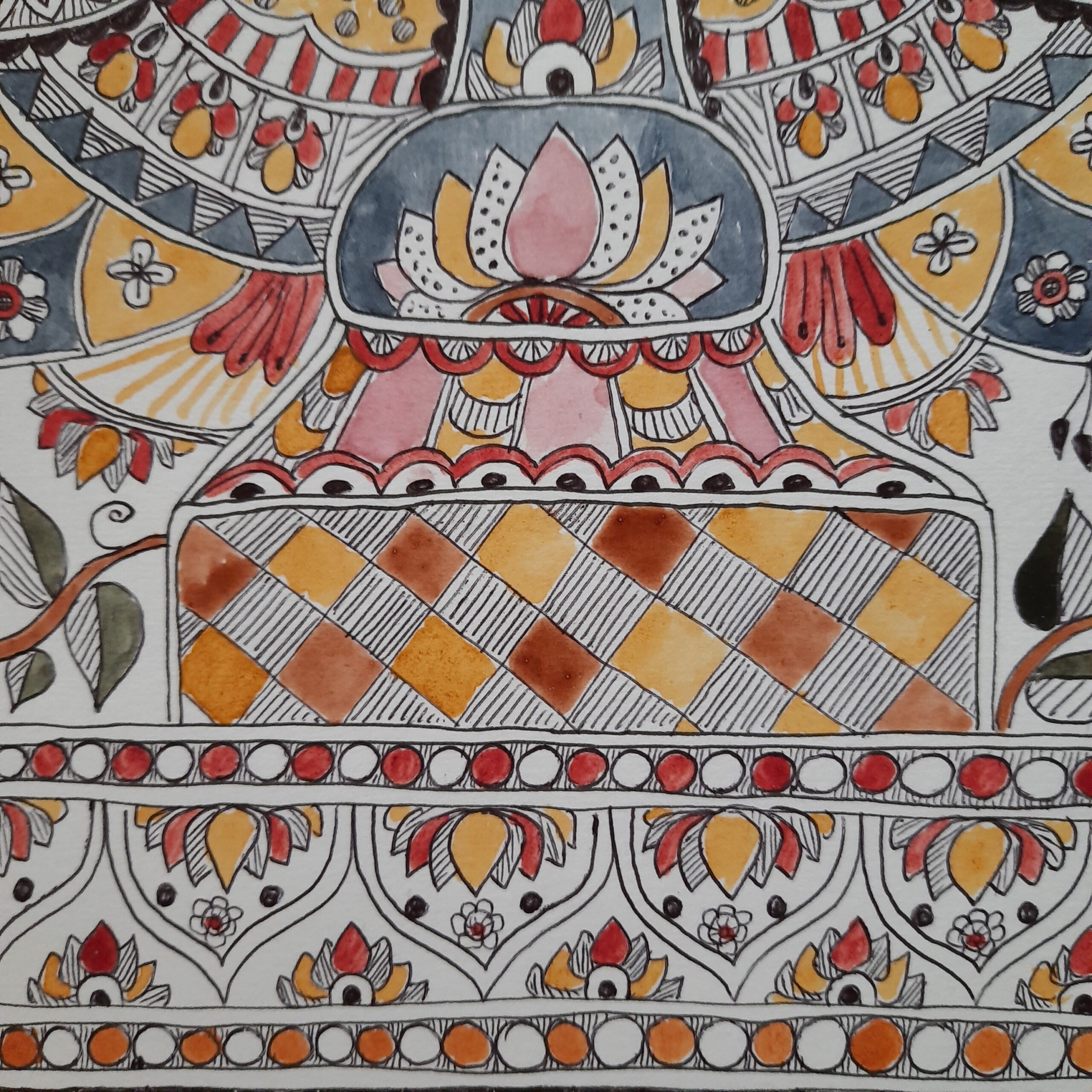
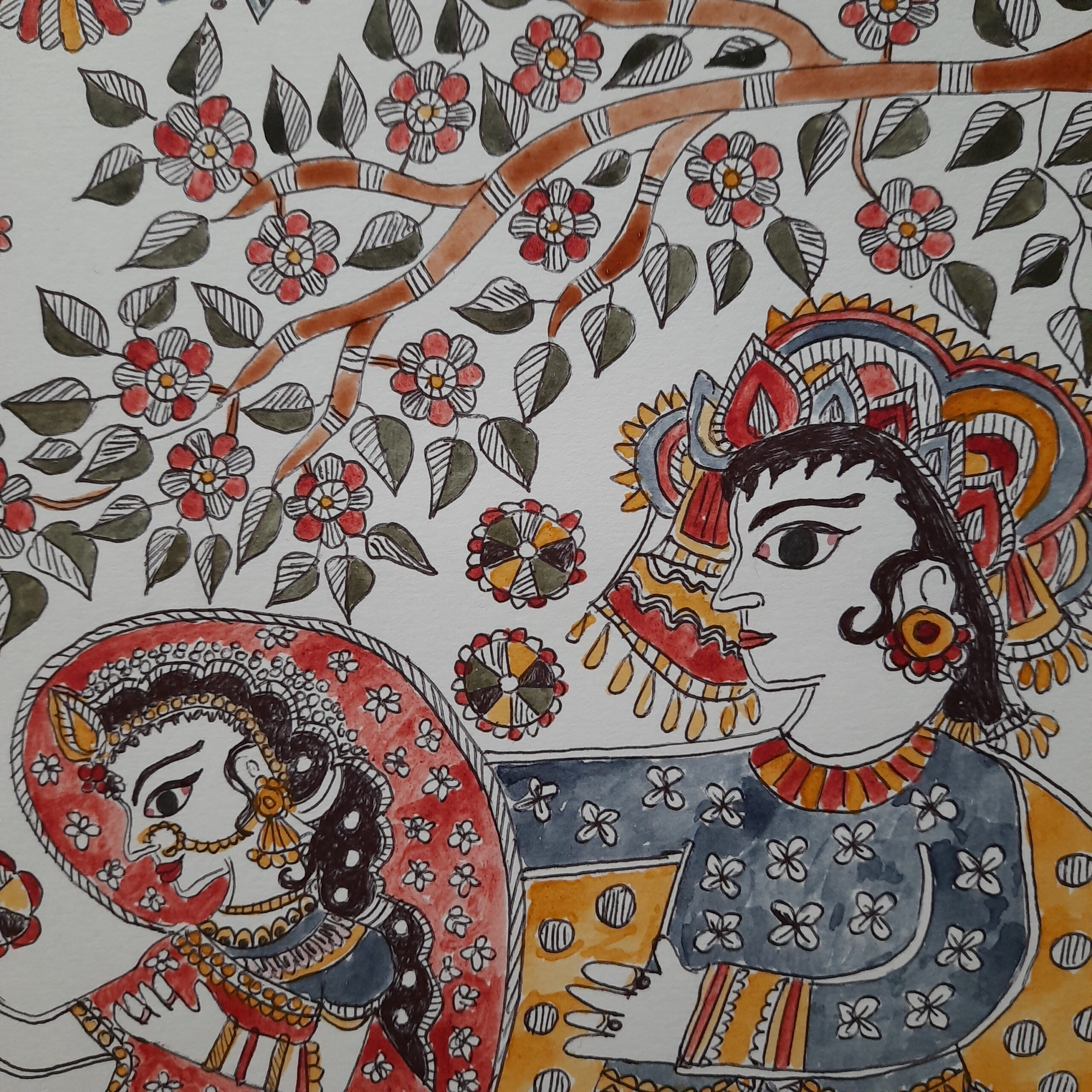
Kohbar is a complex painting of Madhubani style, traditionally drawn on the wall of the room where the young couple would spend their first few days after marriage. It is filled with various symbols meant to promote prosperity and fertility and educate the young couple. In my Kohbar I used some of the motives and designs learned from Priti Karn, and also took inspiration from the Kohbar of her grandmother. Padma Sri awardee Godavari Dutta, along with adding my own designs.


Madhubani Kohbar
Materials
Ink, ballpoint and natural colors on mixed media paper
Size
A1 - 59.4 x 84.1 cm - 23.4 x 33.1 in
Inspired by
Madhubani
Date
March 24, 2023
Category
DrawingAbout This Project
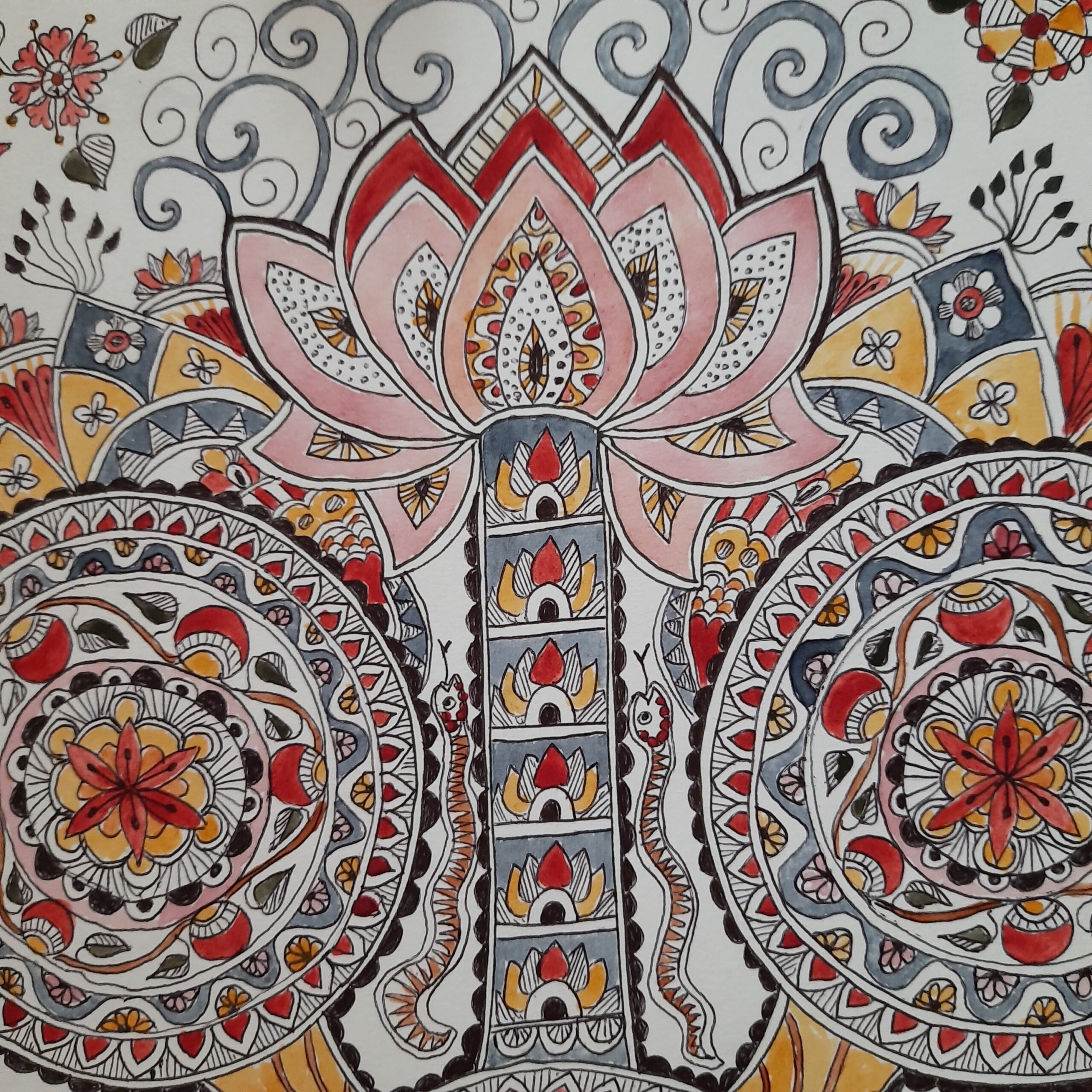
Kohbars vary greatly among various Madhubani schools and of course, from artist to artist. The prominent round central part with 7 circular structures is a lotus pond with lotus leaves, symbolizing feminine happiness, fertility and expansion, inhabited by fish and tortoise that also promote happiness and fertility. A sprout of lotus grows upwards through the pond, symbolizing growth and development.
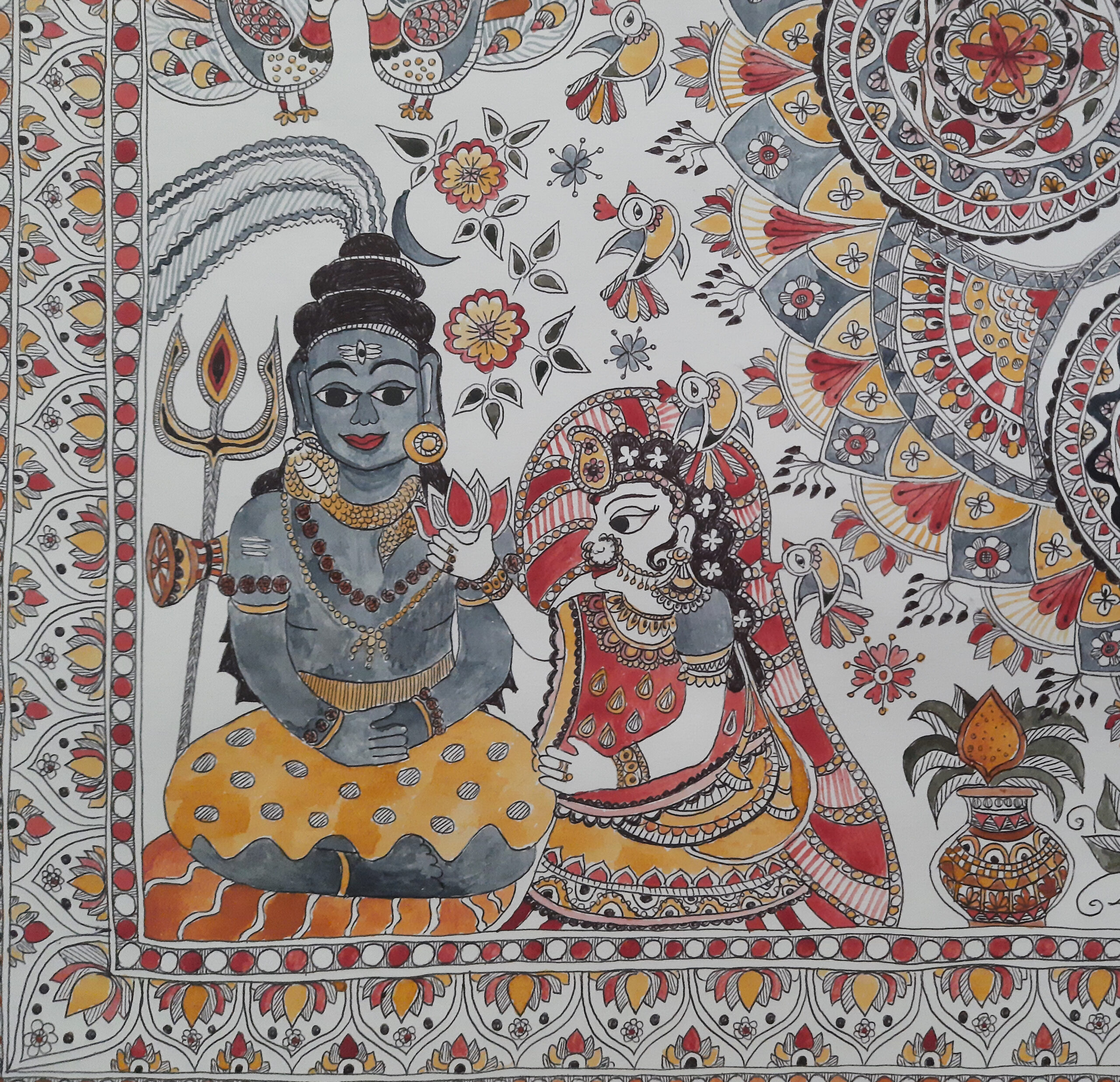
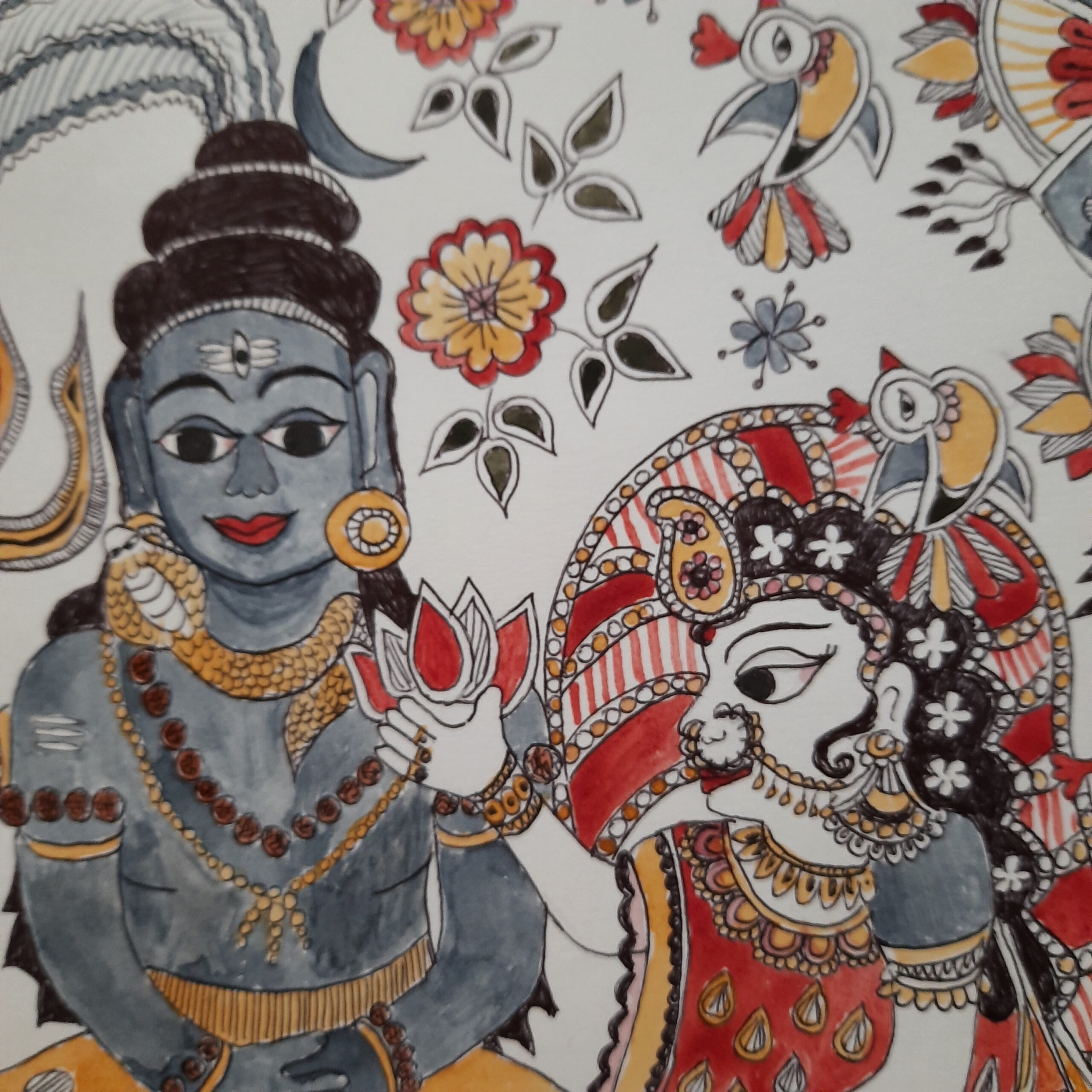
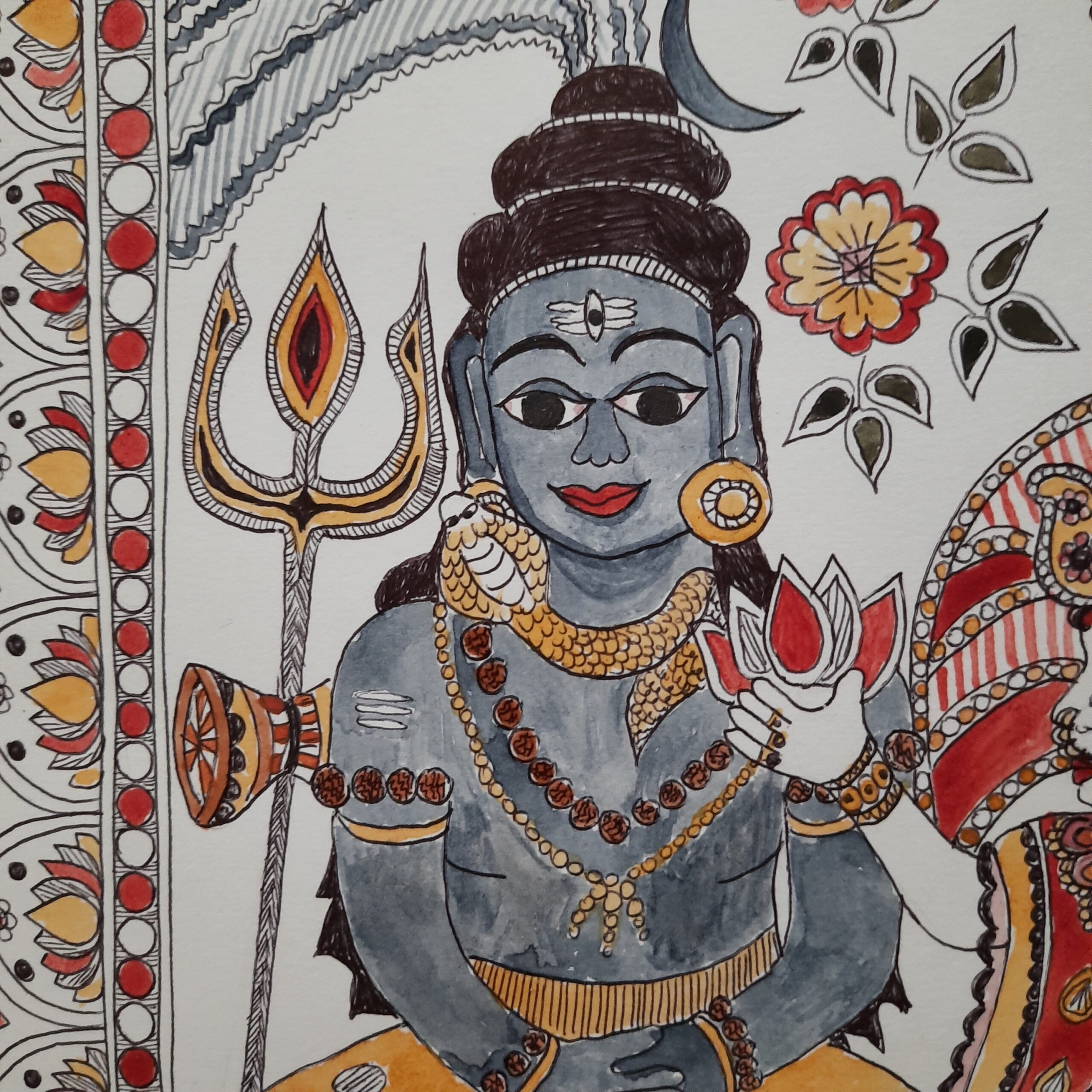
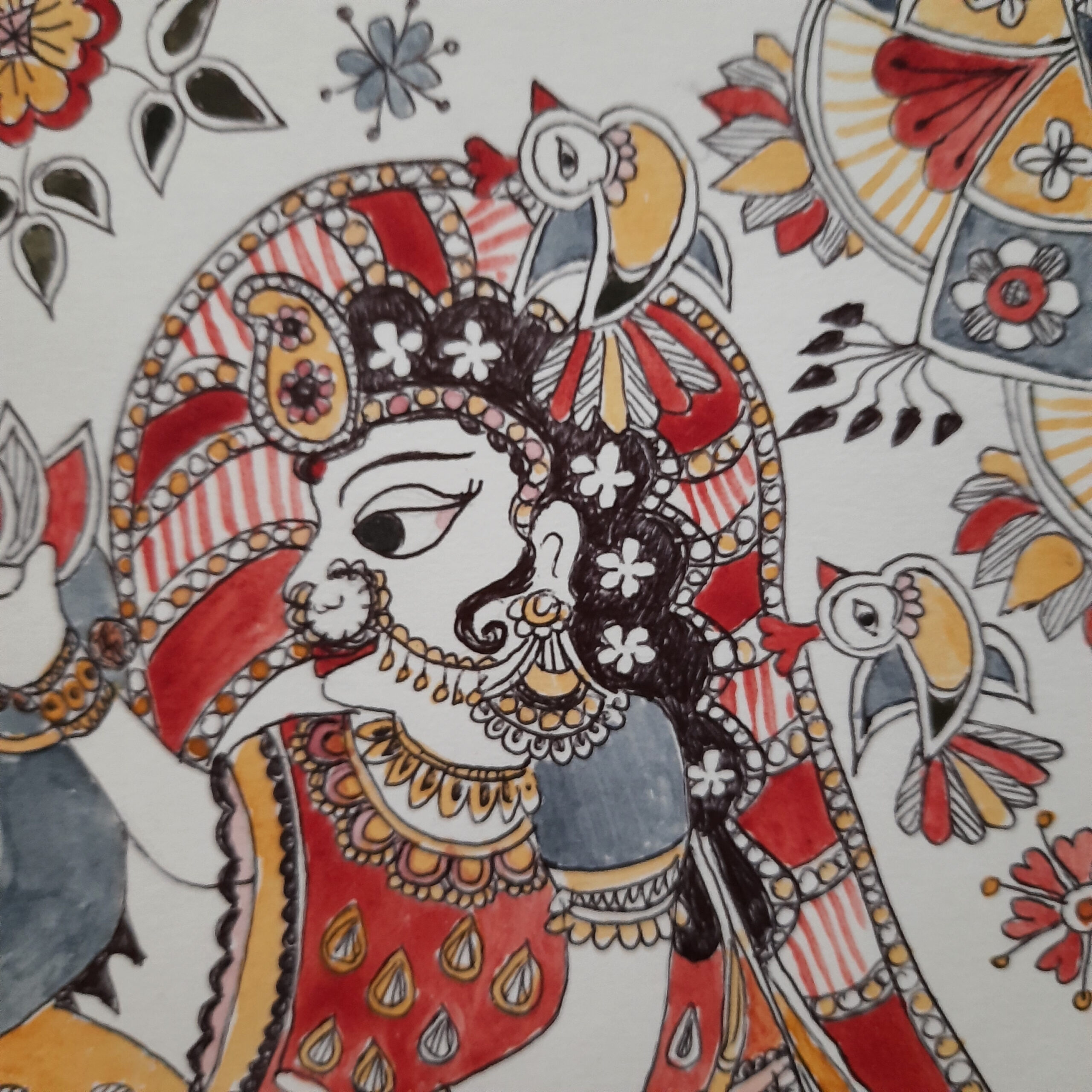
Lord Shiva and his consort Parvati occupy a prominent part in the Kohbar painting. They are considered the most happy and well-matched couple in the material universe, hence all newly married couples would pray to them for the success of their own marriage. Lord Shiva is often depicted living as an ascetic, wearing a tiger skin and matted hair. He bears Ganga on his head upon her descent on earth, along with the moon. Snake king Vasuki, his ardent devotee, is always around his neck. Lord Shiva carries his characteristic trident and a small drum (“damaru”). His wife Parvati is always by his side and always happy in his company.
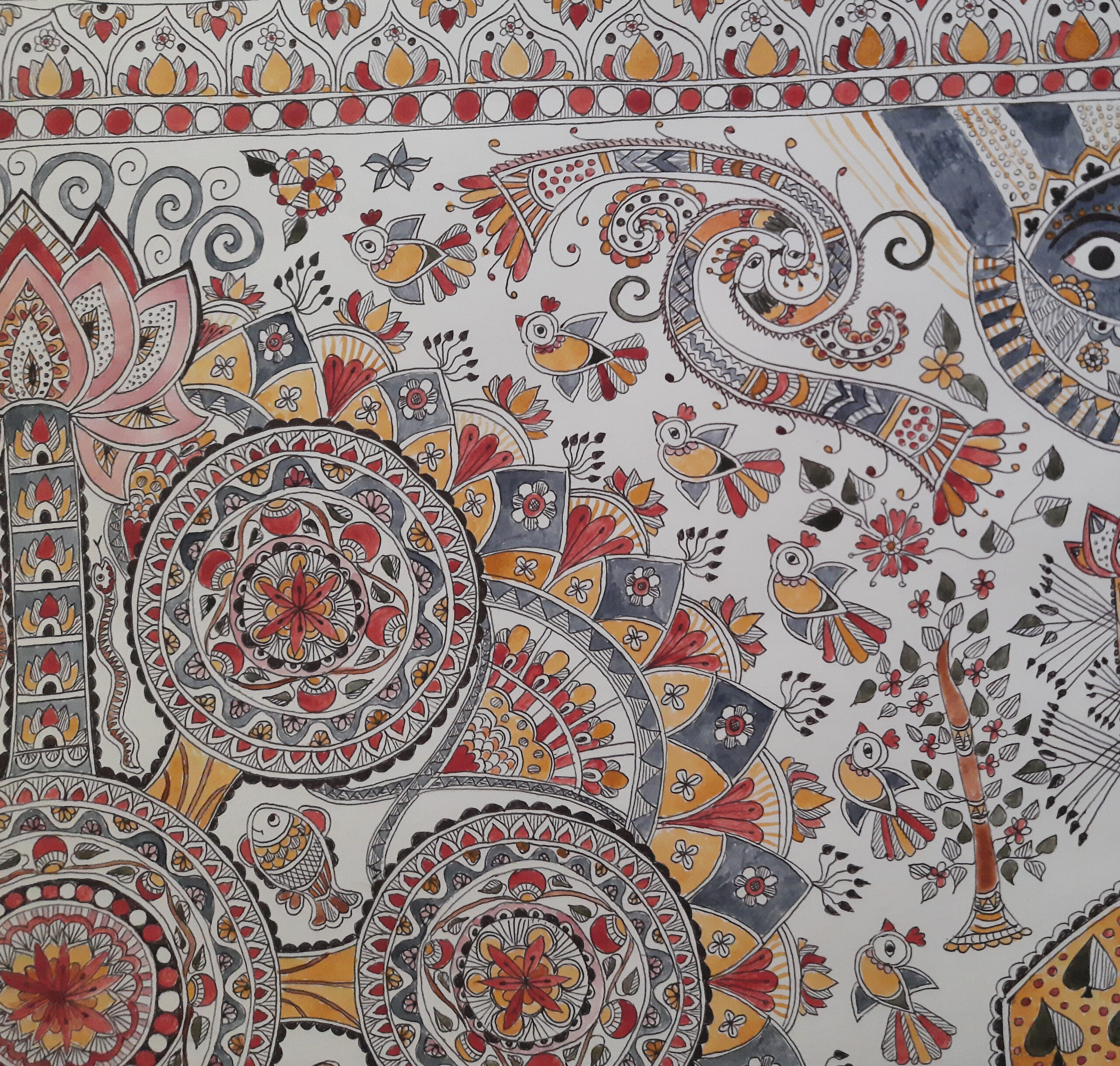
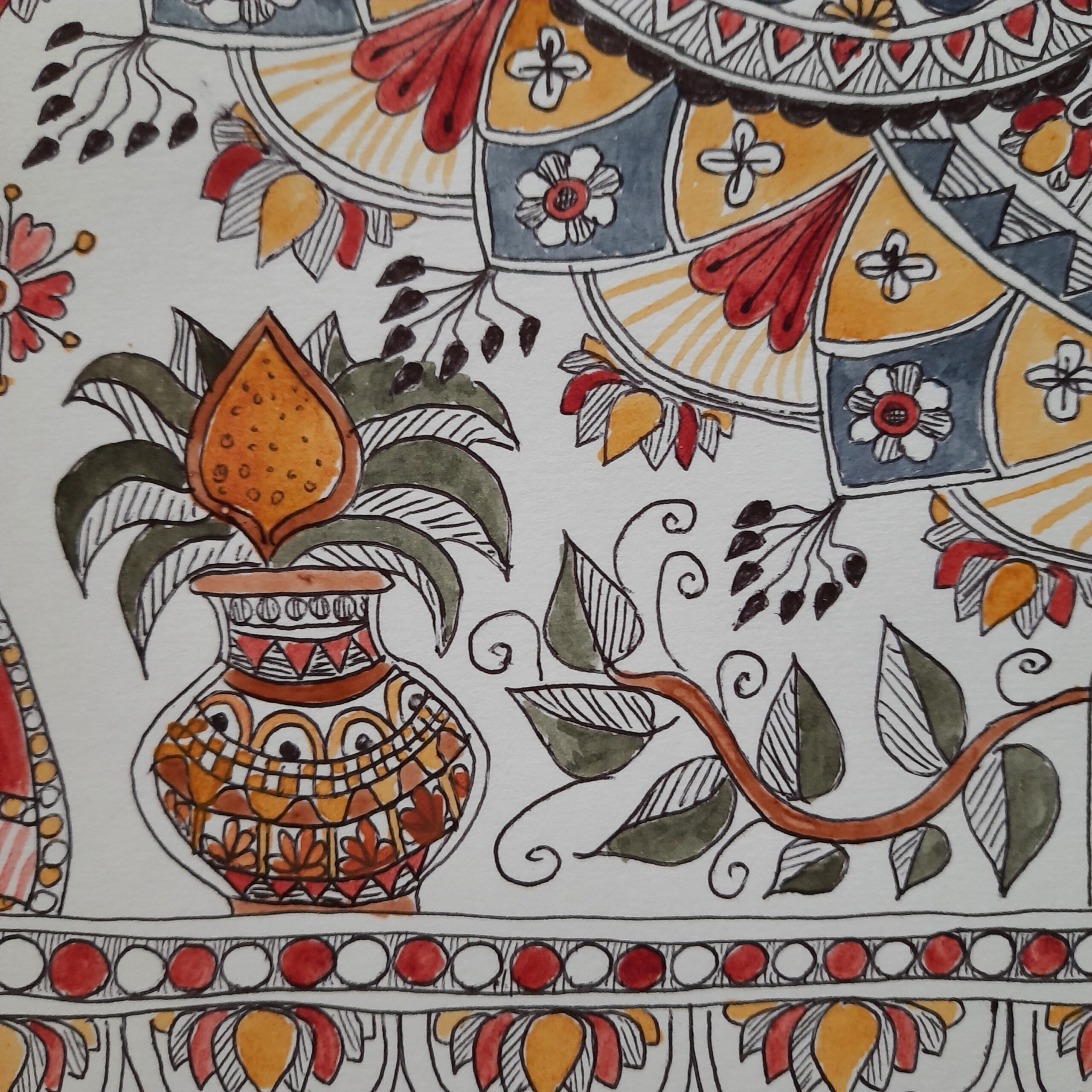
There are various witnesses to the marriage, such as the sun and the moon, as well as nine planets, represented by a special characteristic symbol in Kohbar paintings. Every free space of the painting is filled with auspicious items, such as flowers, fruit trees, couples of birds, fish and other symbolic and auspicious creatures. A Kohbar painting is a true festival of life, nature, expansion and growth.
The central part of the Kohbar with 7 circular structures is actually lotus pond with lotus leaves that symbolize feminine happiness, fertility and expansion. Lotus leaves may contain various geometrical patterns and flower designs similar to mandala art. The pond is inhabited by various creatures that promote happiness and fertility. A sprout of lotus grows upwards through the pond, symbolizing growth and development. As there is no empty space in nature, there is also no empty space left in Madhubani paintings, such as Kohbar!
The right part of the Kohbar painting have several important drawings: moon serving as a witness to the marriage, a bamboo sprout that symbolizes the husband’s family, a drawing of happy and prosperous house and the newly married couple themselves under a flowering branch. Couples of phoenices and snakes, entwined in joyful love dance and trees and flowers fill the remaining spaces of the painting. Although difficult and challenging at times, it was an amazing cultural and artistic experience to work on this traditional Kohbar painting. I am looking forward to similar works in the future.